
ESOL Entry 3 Listening Practice
Improve your English listening skills with Entry 3 listening practice, everyday conversations, activities and exam-style questions.
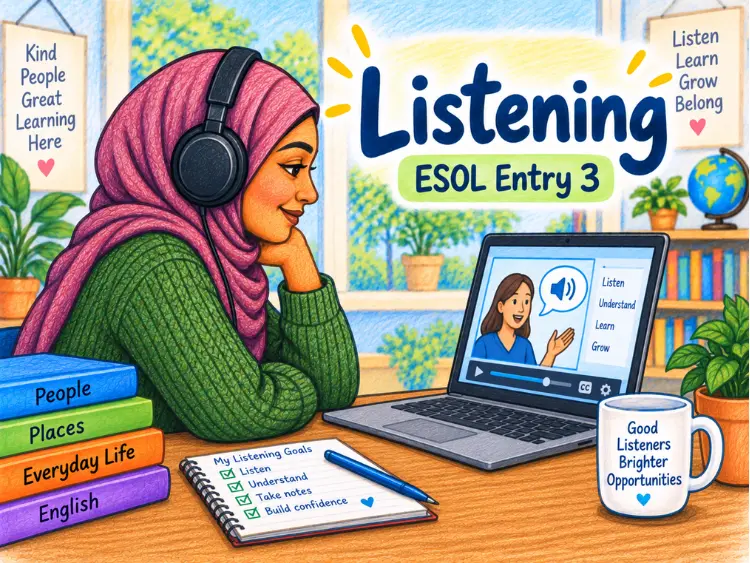
Entry 3 listening practice
Entry 3 listening practice helps learners understand everyday conversations, instructions, announcements and workplace information. Use the videos on this page to develop careful listening, recognise important details and become more confident when people speak at a natural speed.
How to use these listening activities
Choose one video and listen once for the general meaning. Listen again and note key words, names, times, places or instructions. If a task includes questions, read them before the second listening so you know what information to identify. Pause only after you have tried to understand the complete section.
After listening, explain the main message in your own words. Write down unfamiliar vocabulary and practise saying useful phrases aloud. Replaying a short section is helpful, but try not to translate every word. Focus on the speaker’s purpose, tone and the details needed to answer the question.
Prepare for ESOL listening assessments
Exam tasks may include conversations, telephone messages, public announcements and discussions. Practise identifying the main point, following a sequence and separating facts from opinions. Check whether the question asks for one detail or several details before choosing or writing your answer.
For balanced progress, combine listening with reading, writing and speaking activities on the ESOL Entry 3 course page. Learners preparing for an ESOL Skills for Life assessment can also use the official ESB Entry 3 resources for additional guidance and materials.
Study little and often. A focused ten-minute listening session several times a week is usually more effective than one long session. Return to difficult recordings after a few days and notice which words and speech patterns have become easier to recognise.
Use headphones when possible and practise with different speakers and accents. Listening to the same topic in more than one recording helps you recognise alternative vocabulary and prepares you for unfamiliar voices in real conversations and assessments.