
Functional Skills Entry 3 Speaking, Listening and Communication
Build confidence with FS E3 speaking, listening and communication through discussions, presentations, active listening and everyday situations.
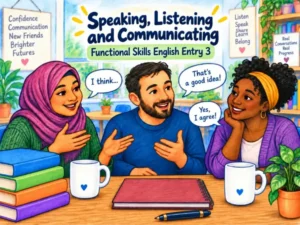
FS E3 speaking, listening and communication practice
These resources help Functional Skills Entry 3 learners take part in conversations, discussions and short presentations with greater confidence. The videos above provide useful examples of communication skills that can be applied in everyday life, education, work and assessment situations.
How to practise FS E3 speaking skills
Watch each video once for the main idea, then watch again and note how speakers introduce a topic, explain their views, give reasons and respond to other people. Practise the useful phrases aloud before repeating the activity with a partner and using your own information.
In a discussion, listen without interrupting and respond directly to the previous speaker. Ask relevant follow-up questions, agree or disagree politely, and support your opinions with examples. Invite quieter group members to contribute so the discussion remains balanced and collaborative.
Develop listening and communication
Active listening means identifying the main point, important details and the speaker’s purpose. If something is unclear, ask for repetition or clarification rather than guessing. Summarising what another person has said is a useful way to confirm understanding and keep a conversation focused.
For presentations, plan a clear beginning, organised main points and a short conclusion. Speak at a steady pace, use appropriate language and make eye contact when possible. Afterwards, reflect on one strength and one improvement for your next attempt.
Prepare for Functional Skills assessments
Assessment tasks may require learners to exchange information, contribute ideas and adapt their communication to the audience and purpose. Use the Functional Skills Entry 3 course page for related reading and writing practice. The official Pearson Functional Skills English information provides authoritative qualification guidance.
Practise regularly in short, realistic activities. Role plays based on appointments, workplace conversations, local services or problem-solving tasks help learners develop natural communication while preparing for assessment.